The Dance of Warriors and Honor
The Intore is one of the most powerful and visually striking cultural symbols of Burundi. More than a dance, it is a living memory of courage, discipline, loyalty, and royal service. Historically, the Intore were not entertainers. They were elite warrior-guards selected to serve the Mwami — the King — and to protect the kingdom.
The word Intore comes from the verb gutora, meaning “to choose” or “to select.” An Intore was therefore “the chosen one.” These young men were carefully selected for their bravery, strength, intelligence, and loyalty. They were trained not only in combat but also in poetry, self-control, physical endurance, and ceremonial performance. To become an Intore was an honor reserved for the most capable.
In pre-colonial Burundi, the Intore formed specialized royal guard units. They were attached to the King, princes, or regional chiefs. They were not a permanent army but rather elite defenders who could be mobilized when needed. During times of peace, they refined their skills through intense physical training and rehearsed their ceremonial dances. During times of war, they became fearless fighters.
Their dance was part of their preparation.
The Intore dance is a dramatic fusion of movement, rhythm, and symbolism. It imitates battle gestures while maintaining elegance and precision. The dancer moves with controlled strength, advancing and retreating as if confronting an invisible opponent. Each step expresses alertness and readiness.
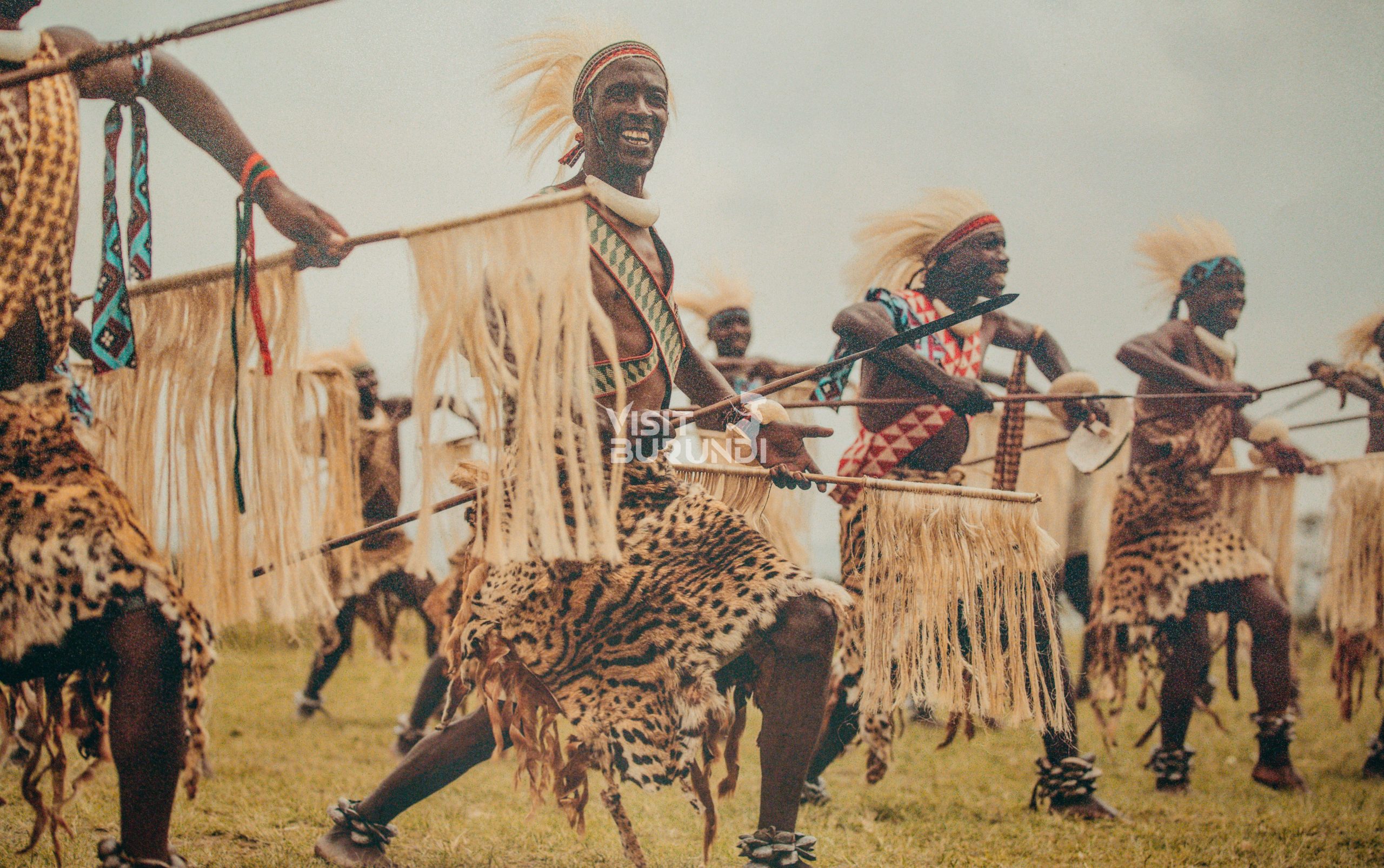
Traditionally, an Intore wears a distinctive costume. Around the waist, he ties a skirt made of animal skin (historically leopard or serval). Around the chest, crossed bead bands enhance his posture. His head is crowned with a long, flowing headdress made of plant fibers or sisal, resembling a mane — giving him a majestic presence. Small bells tied around the ankles create rhythmic accents with every step.
In one hand, the dancer carries a spear (icumu). In the other, he may hold a small shield (ingabo) or a decorated baton. These are not mere props — they recall the warrior heritage of the performer.
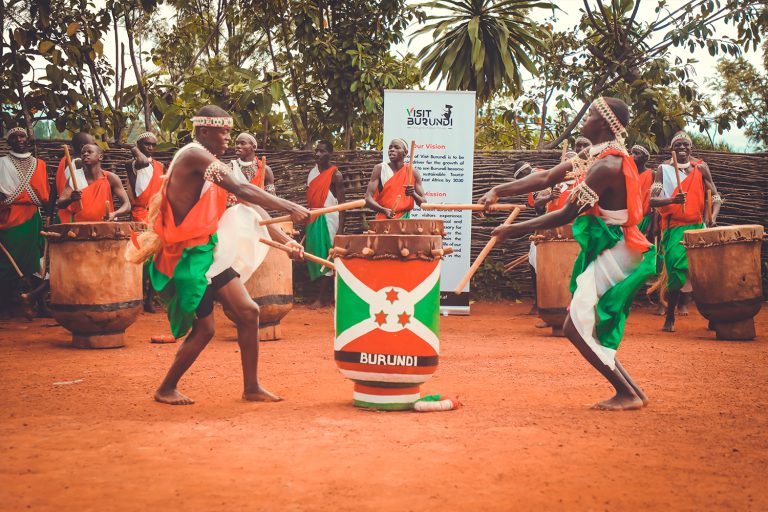
The dance is always accompanied by royal drums. The rhythm of the drums controls the choreography. The central drummer signals changes in tempo, while the dancers respond with jumps, spins, sudden pauses, and powerful footwork. Occasionally, one dancer moves to the center to perform a solo sequence, mixing pride, agility, and humor. At moments, he may gesture dramatically across his throat — symbolizing ultimate loyalty: “May I die if I betray my country.”
Historically, the Intore were also warriors in battle. It was only in peacetime that they dedicated themselves fully to performance. Courage was mandatory. Cowardice meant social disgrace. A man who showed fear in combat risked exclusion from society unless he redeemed himself through exceptional bravery.
With the arrival of colonial rule, the military function of the Intore diminished. Over time, the warrior-guard became a cultural performer. Yet the transformation did not erase its meaning. Instead, the dance evolved into a national symbol of pride.
Today, the Intore dance continues to be performed at national ceremonies, cultural festivals, and major celebrations across Burundi. It is particularly visible in provinces such as Kirundo and Busoni, where the tradition remains vibrant. Although no longer linked to warfare, it still expresses the same values: discipline, loyalty, and national identity.
Far from being a folkloric display, the Intore dance is a living embodiment of Burundi’s royal heritage. It reminds the nation of a time when courage was cultivated as an art, and when dance itself was a form of strength.
When watching the Intore, one does not simply see performers. One witnesses history in motion.